Artist Impression: Visualising the Maasai Mammas Borehole Project
This artist impression illustrates how the Maasai Mammas Borehole Project is designed to function as a shared water system serving households, livelihoods, and the surrounding environment.
The visual shows not just a borehole, but a carefully planned water network that balances domestic use, food production, and livestock needs.
The Borehole Precinct
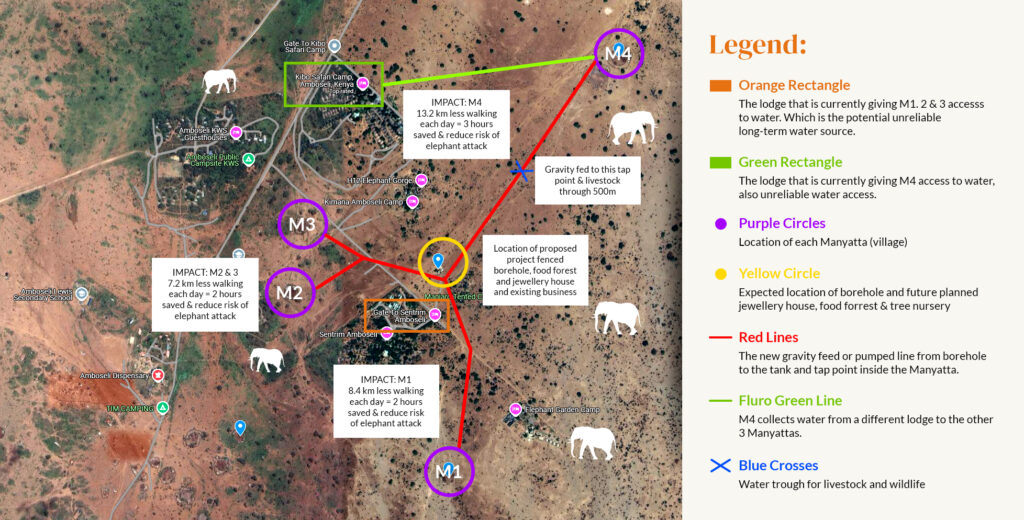
At the centre of the image is the borehole precinct — a fenced and protected area that houses the core water infrastructure.
This precinct includes:
- The borehole and pumping system
- Water storage tanks
- Controlled access points
- A secure perimeter to protect equipment and water quality
The enclosed layout helps ensure the system is safe, maintainable, and community-managed.
Water Distribution and Tap Points
From the borehole precinct, water is distributed outward to several clearly marked tap points.
These tap points connect to nearby households labelled M1, M2, M3, and M4, allowing families to access water closer to home rather than walking long distances.
The layout shows:
- Short, direct water routes
- Multiple access points to reduce congestion
- Shared infrastructure that supports equitable access
This design reduces the daily burden on women and children, who are most often responsible for collecting water.
Supporting Livestock and Wildlife
The artist impression also includes a livestock and wildlife water trough, positioned separately from household water access.
This separation is intentional:
- It reduces pressure on domestic tap points
- It supports livestock health
- It allows wildlife to drink without entering residential areas
By planning for animals alongside people, the project supports coexistence and reduces conflict over water resources.
Food Production and Livelihoods
Within the borehole precinct, the illustration shows cultivated growing areas, representing small-scale food production supported by reliable water access.
This enables:
- Kitchen gardens
- Improved nutrition
- Potential surplus for income generation
Nearby, the image identifies a Jewellery House (approximately 500 metres away), linking clean water access to the Maasai Mammas’ existing craft and livelihood activities.
A Connected, Community-Led System
Rather than a single water point, this project is visualised as a connected system:
- One central borehole
- Multiple household connections
- Dedicated livestock access
- Productive land use
The artist impression reflects a community-centred approach, where water supports health, livelihoods, food security, and resilience.
From Illustration to Implementation
This artist impression represents the intended layout and flow of the project. Final placement and design details will be guided by on-site assessments and community input as the project progresses.
What remains constant is the goal:
reliable, shared access to clean water that strengthens the Maasai Mammas community and the land they depend on.